Strangling of the Strait
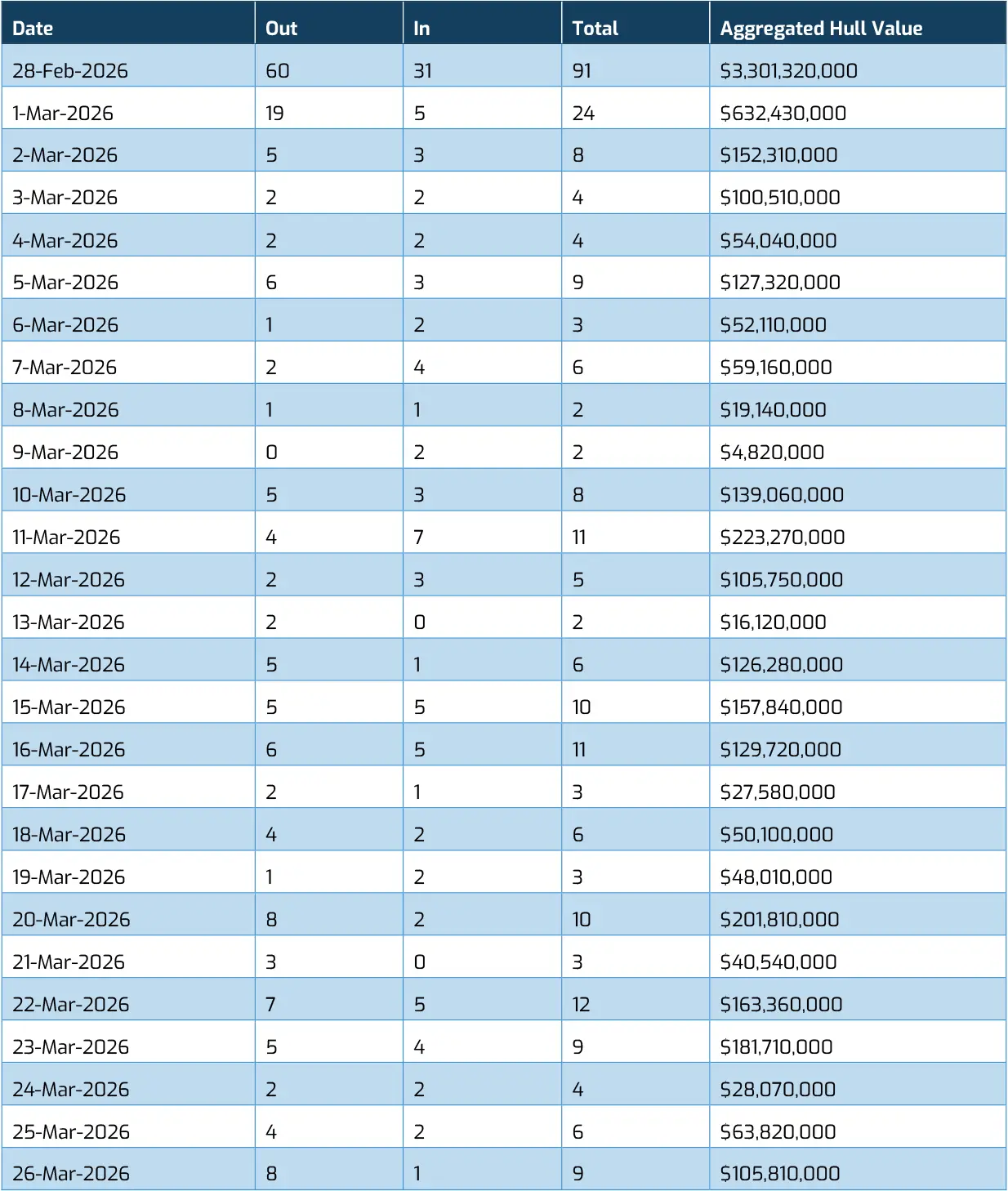
Shipping activity through the Strait of Hormuz has declined sharply following the escalation of the Iranian conflict, as reflected in the accompanying vessel movement data. On 28 February, 91 vessels transited the Strait with an aggregated hull value of $3.3 billion. Within days, volumes dropped significantly, with daily movements falling to low single digits and insured values declining below $30 million on several occasions.
From 2 March onward, traffic remained severely constrained, averaging 6–7 vessels per day, against which more than 25 vessels have been struck by missile or drone fire. Several have been declared constructive total losses, with crew casualties recorded across multiple incidents.
Outbound voyages consistently exceeded inbound, with multiple days recording zero inbound transits, indicating that most commercial operators are avoiding entry into the Gulf under current conditions.
A large proportion of vessels still transiting are Iranian-flagged, with sanctioned and shadow-fleet operators accounting for roughly half of all crossings, reflecting a shift in risk tolerance and trading dynamics.
While there are signs of partial recovery in late March, with occasional peaks of 10–12 vessels per day, activity remains volatile and well below normal levels.
These trends highlight a materially elevated risk environment for insurers, with reduced traffic, concentrated exposure, and ongoing geopolitical uncertainty.
Data and insights are provided by Skytek’s Real World platform.