








Skytek Insight
Strait of Hormuz Disruption: Implications for the Global Insurance Sector
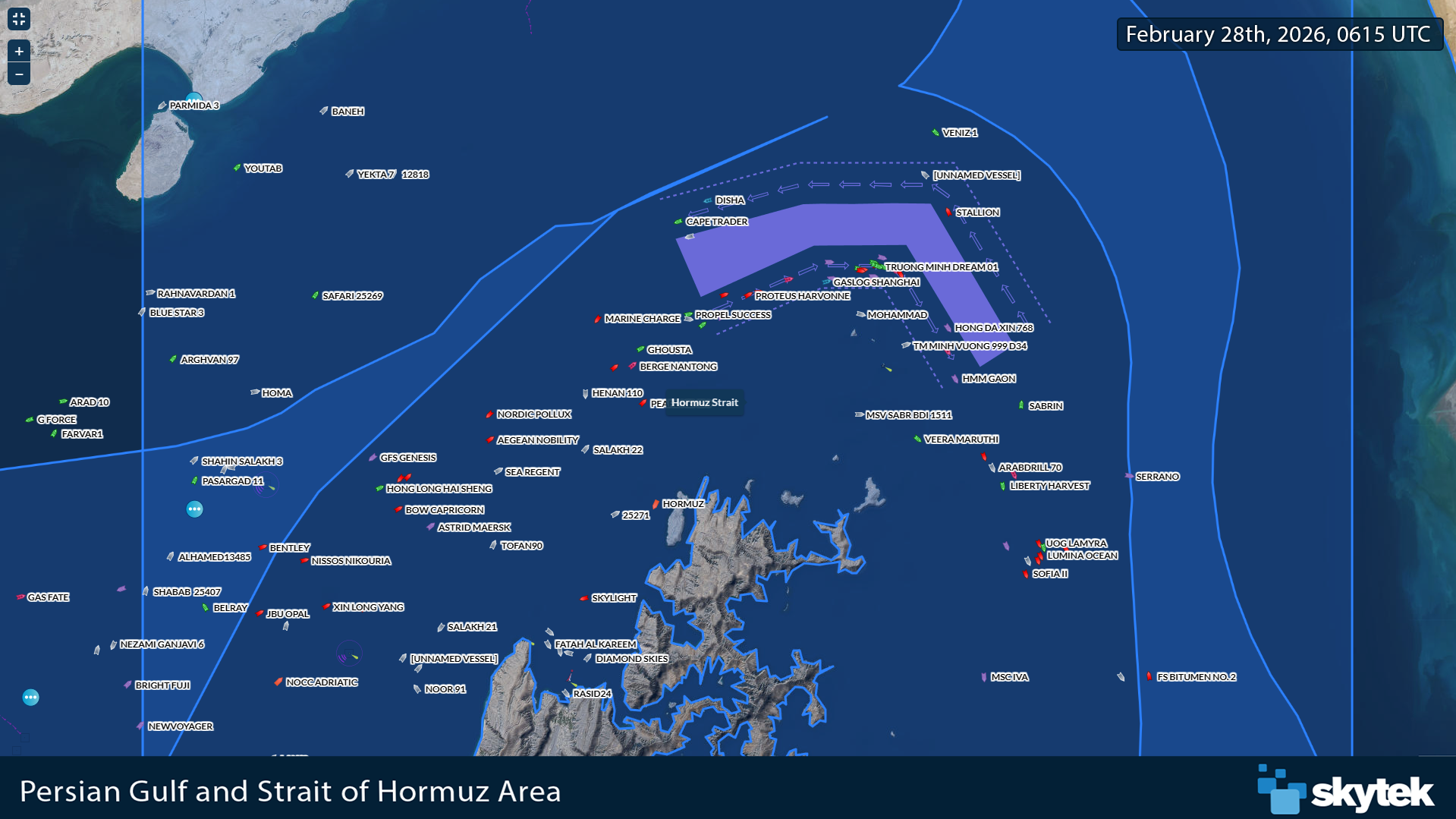
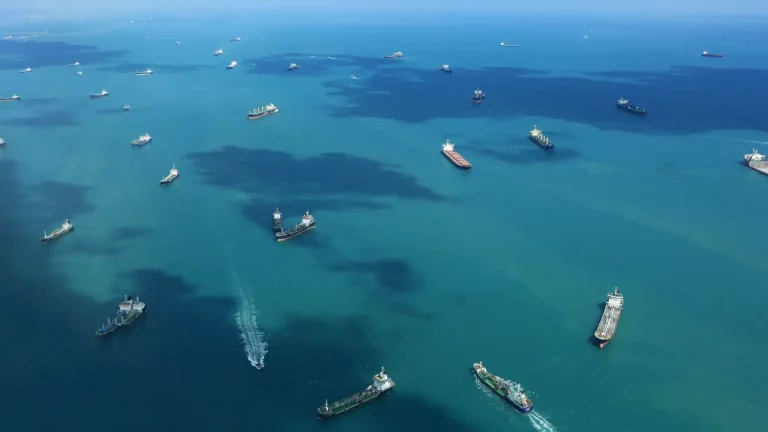
Recent developments in the Strait of Hormuz have raised immediate concern across maritime and insurance markets. Reports indicate vessels are being denied passage via VHF radiotelephone communications attributed to Iranian Revolutionary Guard Corps (IRGC) forces, resulting in a sharp reduction in vessel traffic through one of the world’s most critical maritime chokepoints.
The Strait typically handles an average of around 130 vessel transits per day, primarily oil tankers, LNG carriers, and bulk vessels. Approximately 20% of global oil trade and nearly 30% of LNG shipments pass through this corridor, meaning even short disruptions carry significant global consequences.
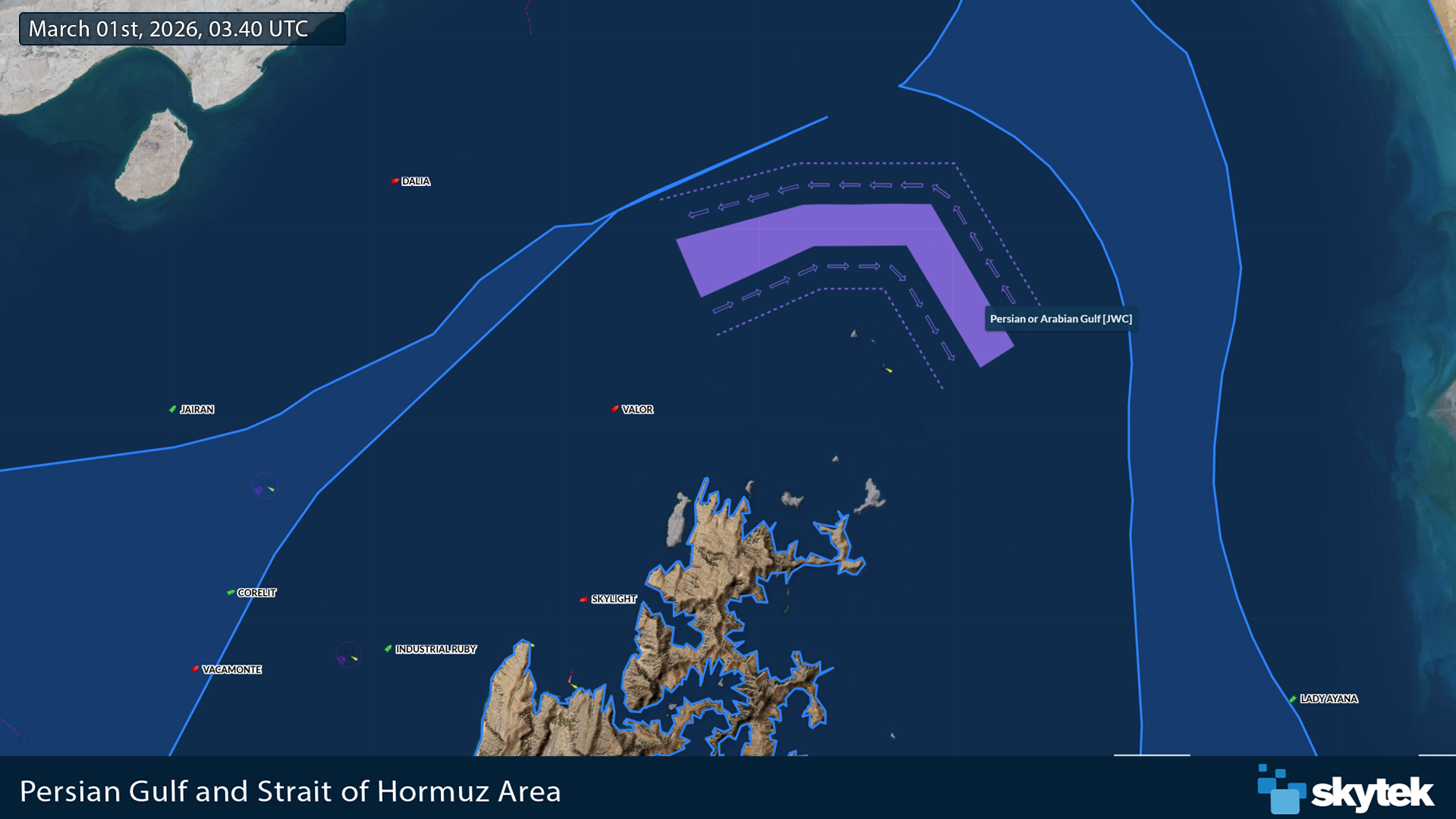
Outbound movements have slowed markedly, with few vessels entering the Strait. While most analysts expect the disruption to last only days, given geopolitical pressure from major energy importers and continued U.S. naval presence, even temporary closures are generating substantial market volatility.
Peak traffic this year was recorded on 22 February 2026, when 169 vessels transited the Strait of Hormuz, including 44% oil and chemical tankers, 34% general cargo vessels, 24% containerships, and 10% gas carriers. Today, March 1st, 2026, traffic has dropped sharply, with only a small number of vessels departing early from the Persian Gulf and virtually no merchant vessels entering the region.
Strategic Considerations
Unlike other global routes, the Persian Gulf has no viable rerouting option, increasing dependency on real-time maritime intelligence and exposure monitoring.
Uncertainty surrounding safe passage through the Strait of Hormuz is already driving freight rate volatility, as vessel operators delay voyages and reassess operational risk exposure. At the same time, war risk and marine insurance premiums are expected to rise sharply as underwriters review exposure accumulation within the Persian Gulf, a region with no viable alternative maritime routes. Energy markets typically react immediately to perceived supply constraints, with oil and gas price increases amplifying insured values across cargo and trade-related insurance lines. Insurers should also anticipate a rise in operational claims, including those related to voyage delays, contract cancellations, force majeure declarations, charter party disputes, and broader supply chain interruptions.
Periods of geopolitical instability reinforce the need for continuous situational awareness, combining vessel tracking, behavioural analysis, and geopolitical indicators to support proactive underwriting decisions. Skytek’s Real World continues to monitor vessel activity and maritime risk indicators in real time, supporting insurers and maritime stakeholders with actionable operational intelligence during periods of disruption.